

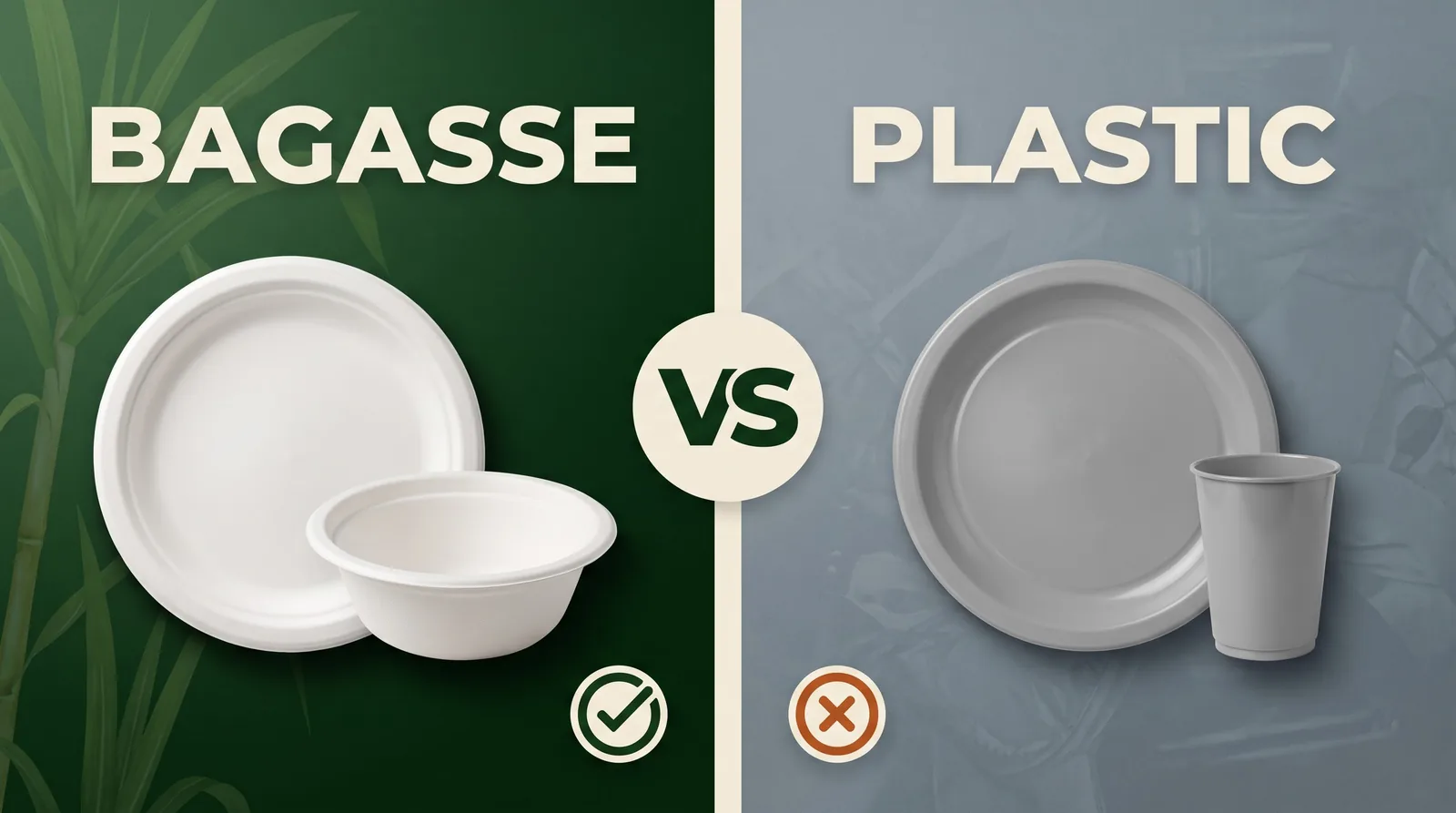
For decades, plastic tableware has been widely used by restaurants, caterers, food delivery companies, events, and other foodservice businesses. It is lightweight, inexpensive, and easy to manufacture. However, growing concerns about plastic waste have encouraged businesses to look for more sustainable alternatives.
One of the strongest alternatives is bagasse tableware, made from sugarcane fiber. But how does bagasse compare with plastic, and which option makes more sense for the future?
What Is Bagasse Tableware?
Bagasse is the fibrous material left after sugarcane is processed for juice or sugar. Instead of treating this fiber as waste, manufacturers can process it into pulp and mould it into plates, bowls, trays, and food containers.
This gives foodservice businesses an option that uses an agricultural by-product rather than relying entirely on conventional plastic materials.
Bagasse vs Plastic: Key Differences
1. Raw Material
Traditional plastic tableware is generally produced from petroleum-based materials. Plastic manufacturing depends on fossil-based raw materials and creates products that can remain in the environment for a very long time.
Bagasse, on the other hand, is produced from sugarcane fiber. Since the material comes from an agricultural source, it offers a different approach to disposable food packaging and tableware.
2. Environmental Considerations
The biggest reason businesses are moving away from conventional plastic tableware is waste management.
Many plastic products are difficult to recycle, particularly when they are contaminated with food. This can result in large quantities of single-use plastic entering waste streams.
Bagasse products are designed to be a more sustainable alternative, and many commercially available bagasse products are suitable for industrial composting where appropriate facilities and certifications are available.
However, buyers should always check the actual product specifications and applicable local waste-management requirements rather than assuming every bagasse product will compost under every condition.
3. Foodservice Performance
Sustainability alone is not enough for foodservice businesses. Disposable tableware must also perform well.
Quality bagasse plates and bowls can be designed for serving hot and cold food and can provide good rigidity for restaurants, catering businesses, takeaway services, events, and institutional foodservice.
Plastic can also offer strong performance, but businesses increasingly have to consider the environmental and regulatory implications associated with single-use plastic.
Why Businesses Are Choosing Bagasse
The shift toward bagasse is not only about environmental awareness. Buyers are also responding to changing customer expectations, sustainability goals, packaging policies, and restrictions on certain single-use plastic products.
For importers and distributors, bagasse tableware can also provide an opportunity to expand their sustainable product range and serve foodservice customers looking for alternatives to conventional disposables.
Choosing the Right Bagasse Supplier
The quality of bagasse tableware depends heavily on manufacturing standards, moulding quality, raw-material handling, packaging, and quality control.
Buyers should check product dimensions, weight, material specifications, packaging, food-contact compliance, certifications where required, and the supplier's export capabilities before placing a bulk order.
Caneora International manufactures and exports bagasse tableware from India for international buyers, with products designed for foodservice, catering, takeaway, distribution, and private-label requirements.
Which Is Better for the Future?
Plastic remains useful in many applications, but the pressure to reduce single-use plastic waste is changing the foodservice industry.
Bagasse offers businesses a practical alternative made from sugarcane fiber, combining functional foodservice performance with a more sustainability-focused material choice.
For companies planning their future disposable tableware range, the decision is increasingly moving beyond price alone. Material sourcing, product performance, compliance, waste management, and customer expectations all matter.
As sustainable packaging continues to grow globally, bagasse tableware is well positioned to become an important part of the future of foodservice.


