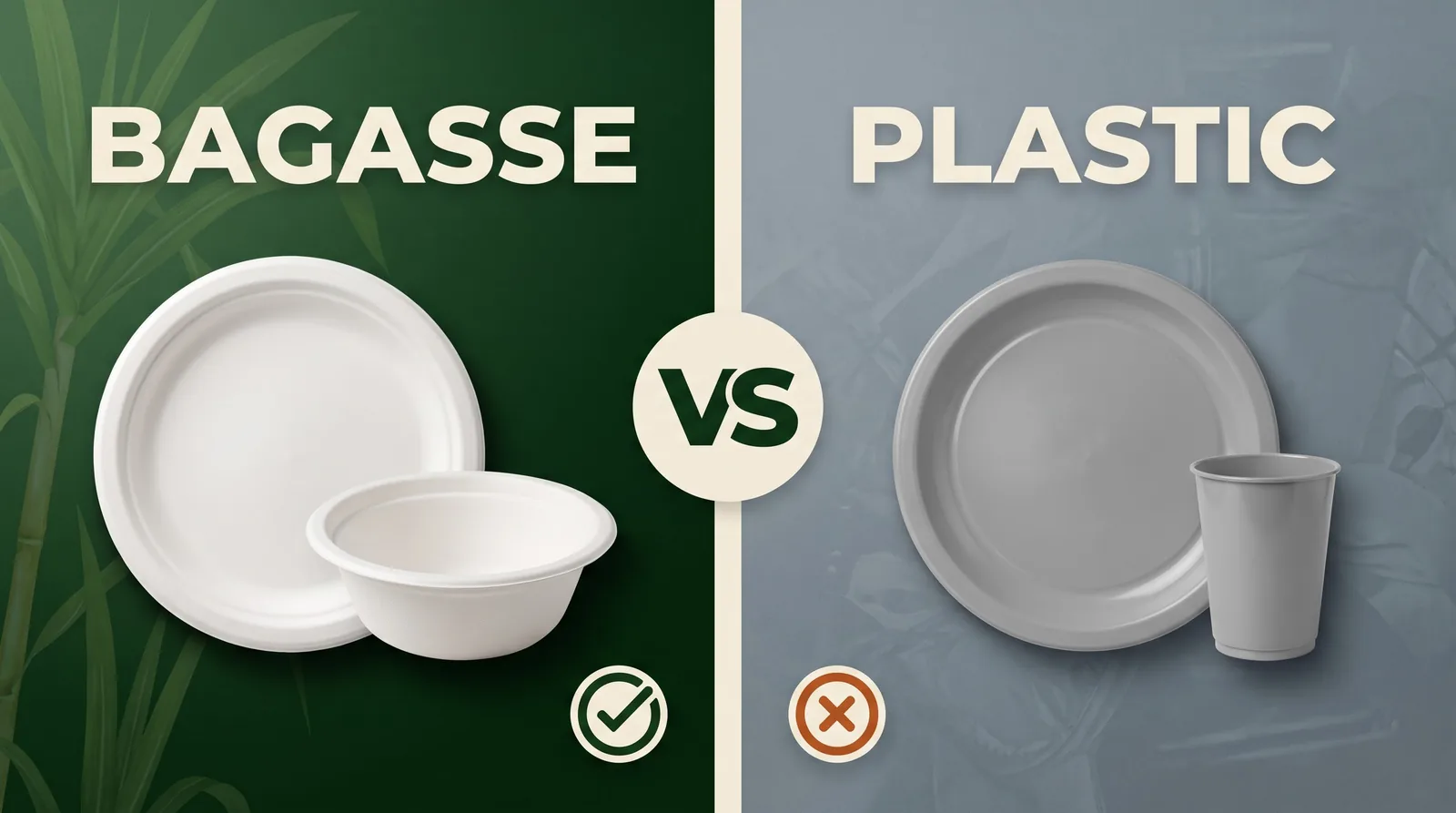


A white bagasse plate may look simple, but there is a complete manufacturing process behind it. From sugarcane fibre to the finished foodservice product, several stages determine its shape, strength, consistency and final quality.
Understanding how bagasse tableware is made can help importers, distributors and foodservice businesses make better purchasing decisions when selecting a manufacturer.
What Is Bagasse?
Bagasse is the fibrous material left after sugarcane is processed.
Instead of allowing this fibre to go unused, it can be processed and converted into pulp for moulded foodservice products. Depending on the product design, this material can be used to make plates, bowls, trays, clamshell containers and meal boxes.
The manufacturing process begins with preparing the sugarcane fibre for this transformation.
Step 1: Preparing the Sugarcane Fibre
The first stage is preparing the sugarcane fibre for further processing.
The fibre needs to be processed into a form that can be converted into pulp. Consistency at this stage is important because the characteristics of the raw material can influence the finished product.
The prepared fibre then moves to the pulp preparation stage.
Step 2: Pulp Preparation
The prepared sugarcane fibre is processed into pulp suitable for moulding.
The pulp becomes the basic material from which the final tableware product is formed.
At this stage, the preparation needs to be suitable for the product being manufactured. A plate, bowl and clamshell container may require different mould designs and product specifications.
Step 3: Moulding the Product
Once the pulp is prepared, it is formed using product-specific moulds.
This is where the material begins to take the shape of the finished product.
Different moulds can be used to produce:
- Plates
- Compartment plates
- Bowls
- Trays
- Clamshell containers
- Meal boxes
The mould determines important aspects such as the product's shape, dimensions and overall design.
Step 4: Pressing and Forming
Heat and pressure are used to form the pulp into the required shape.
This stage is important for achieving the intended dimensions and structure of the product.
For manufacturers, consistency matters. Buyers ordering large quantities need the products to remain close to the approved specification throughout production.
Step 5: Drying and Finishing
After forming, the moulded products are dried and finished.
The finished products are then checked for their appearance and conformity with the required specifications.
Depending on the product, quality checks can include dimensions, shape, surface finish and overall construction.
Step 6: Quality Inspection and Packaging
The final stage is inspection and packaging.
Products are checked before being packed for shipment. For international orders, packaging is particularly important because products may be handled several times during transportation.
Proper packing also helps buyers understand the number of pieces per pack, pieces per carton and overall shipment requirements.
Why Manufacturing Quality Matters
Two products can both be labelled as “bagasse tableware” but still differ in weight, dimensions, rigidity and finish.
That's why buyers should look beyond the material description when selecting a manufacturer.
A reliable supplier should be able to provide clear product specifications, samples and relevant documentation for the intended market.
Caneora International: Bagasse Tableware Manufacturer
Caneora International focuses on supplying bagasse tableware and foodservice products to international B2B buyers.
Its product range includes bagasse plates, bowls, trays, clamshell containers and other moulded bagasse products.
For importers and distributors, understanding the manufacturing process makes it easier to evaluate product specifications and compare suppliers based on quality rather than price alone.