

Walk into a restaurant, takeaway kitchen or catering operation today and you'll notice a simple change: disposable food packaging is no longer just about convenience. Businesses are paying more attention to the materials they use, how those products perform, and what happens after use.
This is one reason bagasse tableware is becoming an important part of the future of global foodservice.
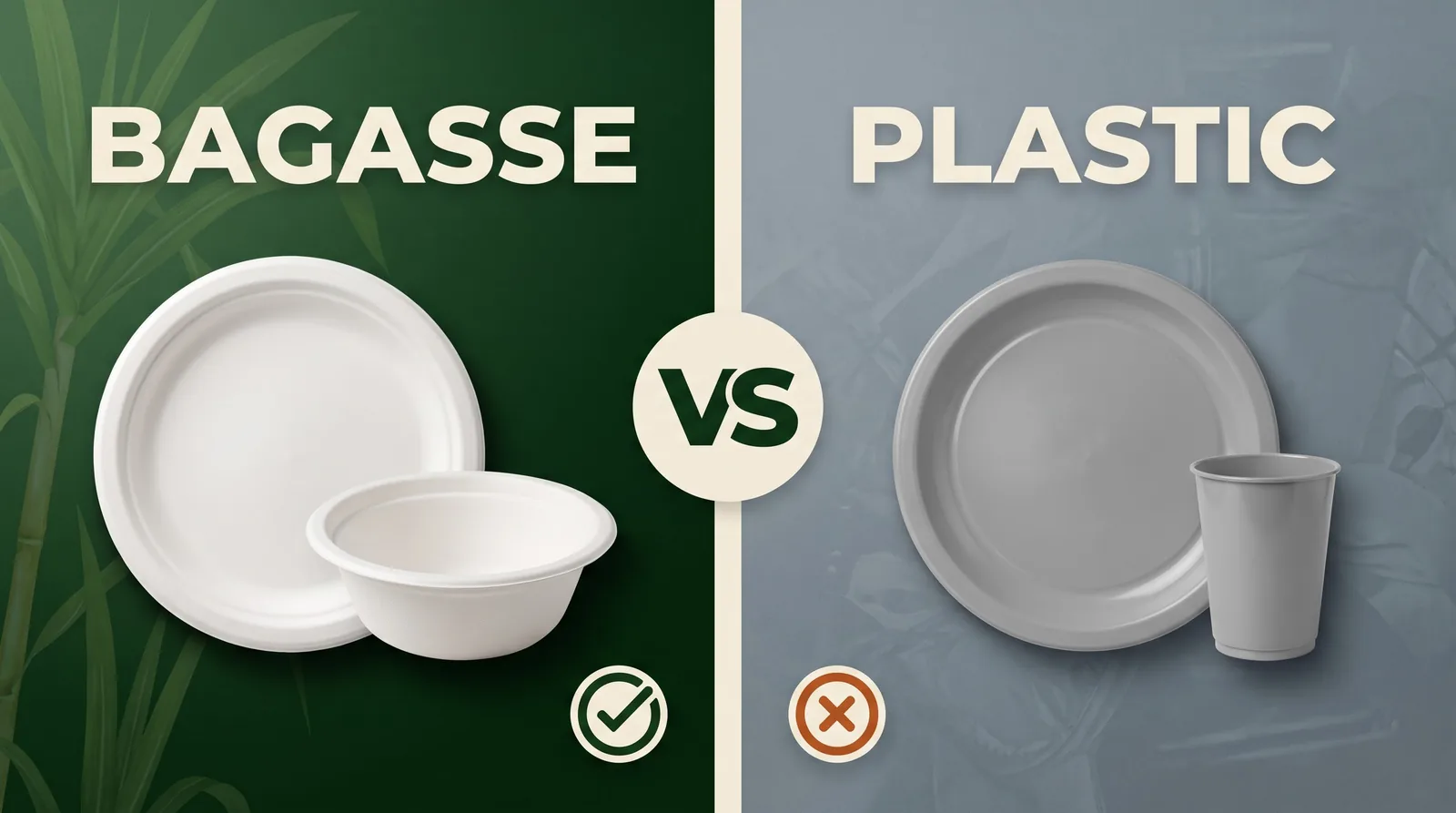
Made from sugarcane fibre, bagasse tableware offers a practical moulded-fibre option for businesses looking for alternatives to conventional plastic and foam foodservice products.
What Makes Bagasse Different?
Bagasse is the fibrous material left after sugarcane is processed. This fibre can be processed into pulp and moulded into products such as plates, bowls, trays and takeaway containers.
The concept is simple, but the potential applications are broad.
Today, bagasse products can be used across restaurants, catering, takeaway businesses, food delivery, cafeterias and other foodservice operations.
For businesses, the attraction isn't only the material itself. The products can be designed in different sizes and formats to suit different food applications.
Foodservice Needs Products That Actually Work
Sustainability alone doesn't make a food container useful.
A restaurant still needs a plate that holds food properly. A takeaway business needs a container that is practical to pack and transport. A caterer needs products that are consistent across large quantities.
That's why product specifications matter.
Depending on the application, buyers may consider:
- Product dimensions
- Weight and thickness
- Capacity
- Rigidity
- Stackability
- Packaging configuration
- Intended food application
This is where quality-focused manufacturing becomes important. A bagasse product needs to meet the practical requirements of the business using it.
Why Global Businesses Are Looking at Bagasse
Foodservice is a high-volume industry. Restaurants, caterers, food distributors and takeaway businesses can use thousands of disposable products every month.
As businesses look for alternatives to conventional materials, bagasse provides another option to consider.
Its sugarcane-derived fibre also gives businesses a clear material story when communicating their packaging choices to customers.
However, responsible sourcing still matters. Buyers should evaluate the actual product, applicable certifications, food-contact requirements and disposal infrastructure in their market rather than relying only on general sustainability claims.
The Role of Manufacturers
The future of bagasse tableware will depend not just on demand, but also on manufacturers being able to deliver consistent products at commercial scale.
For international buyers, this means looking at more than the product photograph.
They need to understand:
- Product specifications
- Quality consistency
- Packaging
- Bulk-order requirements
- Certifications and documentation
- Export capabilities
- Total landed cost
A reliable manufacturing partner can make the transition to bagasse products much easier for distributors and foodservice businesses.
Caneora International and the Global Bagasse Market
Caneora International focuses on supplying bagasse tableware and foodservice products to international B2B buyers.
Its product range includes bagasse plates, bowls, trays, clamshell containers and other moulded bagasse products.
For importers, distributors, wholesalers and foodservice businesses, the focus is on understanding the required product specification and supply requirements rather than treating every order as a simple commodity purchase.
As demand for alternative foodservice materials continues to develop, manufacturers and buyers will both have an important role in building a more practical and reliable supply chain.
What Is the Future of Bagasse Tableware?
Bagasse is unlikely to be the answer for every foodservice application. Different foods, operating conditions and markets have different requirements.
But its combination of sugarcane-derived fibre, moulded product formats and suitability for many foodservice applications gives it an important place in the evolving disposable tableware market.
The next stage of growth will likely depend on better product consistency, appropriate certifications, efficient packaging and manufacturers that can meet the needs of international buyers.